Underground Electric Railways Company of London
Collection record for the company.
Open the sourceCharles Yerkes and the American money behind London’s Underground
In 1902 a Chicago traction magnate with a controversial reputation set up the company that built three of the deep lines. This site argues that the Underground we know owes its early capital, and part of its management style, to American finance.
Tube map of 1908. Credit below.
The topic has a clear London–US shape and a digitised company archive. The main risks are the technical finance, which needs plain explanation, and image licensing at the London Transport Museum.
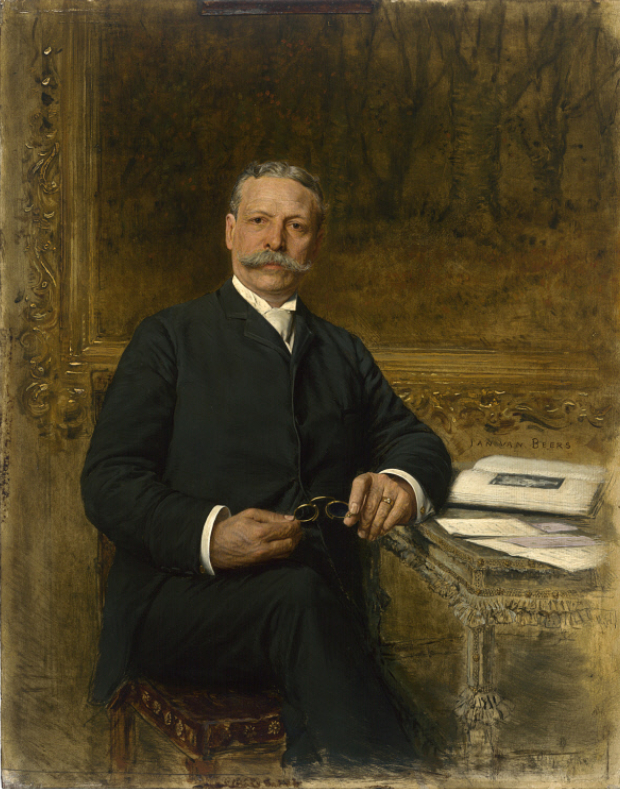
Yerkes formed the Underground Electric Railways Company of London in 1902 to finance electrification of the District Railway, the Lots Road power station and three deep tube lines that became the Bakerloo, Piccadilly and Northern. It raised an initial £5 million, later topped up with debentures and profit-sharing notes. Speyer Brothers helped arrange the finance, with New York and Boston interests.
Collection record for the company.
Open the sourceThe Museum’s short biography.
Open the sourceThe route that became the Hampstead tube needed private bills. The Charing Cross, Euston and Hampstead Railway bills came before Parliament in 1891, 1893 and 1901–02, and the Lords debated one on 27 January 1902. TfL’s research guides point to where the records are held.
Record of the bill’s progress.
Open the sourceWhere to find the records.
Open the sourceThe first Board Minute Book of the UERL has been digitised by the TfL Corporate Archives. It lets us see decisions as the directors made them, which is better evidence of how the venture worked than later retellings. The National Archives also holds a record for the company.
Digitised minutes of the company.
Open the sourceCatalogue record.
Open the sourceA pocket map issued by the company in 1908 shows the Hampstead tube, the Bakerloo extension to Paddington and the Piccadilly branch to the Strand, all of which opened in 1907. The Museum’s catalogue says the sunburst logo on its cover, designed in 1907 by W. J. Pawsey, was the Underground Group’s earliest logo, and that the distinctive UNDERGROUND lettering followed in 1908. Frank Pick and Albert Stanley, later Lord Ashfield, are the names usually attached to what came next.
Catalogue record with description. Image licensed by the Museum.
Open the sourceShort biography.
Open the sourceArguments about private money and public transport run through every fare rise and funding row. Yerkes gives the group a concrete start: a venture run for investors that nonetheless left London a network it still uses, with the question of who should bear the risk still unresolved.
Tube map 1908.jpg, Wikimedia Commons (https://commons.wikimedia.org/wiki/File:Tube_map_1908.jpg). Author unknown. Licence on the Commons page: public domain.
Charles Tyson Yerkes by Jan van Beers.jpg, Wikimedia Commons (https://commons.wikimedia.org/wiki/File:Charles_Tyson_Yerkes_by_Jan_van_Beers.jpg). Portrait by Jan van Beers, 1893. Licence on the Commons page: public domain.
The London Transport Museum’s own images are © TfL and licensed for a fee, so this site links to the Museum’s collection records instead of copying them.

